A History
of The Old Fort
The Old Las Vegas Mormon Fort State Historic Park plays an important role in the history of the City of Las Vegas, Nevada.
It is the only U.S. State Park located in a city that houses the first building ever erected in that city.
Follow along with the timeline on this page to get a sense of how The Old Fort came to be, how it changed hands on many occasions, and how it contributed to the growth of not only the City of Las Vegas, but of the country itself.
Did you know that The Old Fort played a key role in the construction of the nearby Boulder (now Hoover) Dam? Were you aware that one woman, who initially hated the idea of living here, came to change the face of the entire Las Vegas Valley?
Old Spanish Trail Association
Thursday, August 20, 1931
Daughters of Utah Pioneers
A Video History of The Old Fort
A Brief History Narrative
The Las Vegas Springs, Native Americans, and the Old Spanish Trail
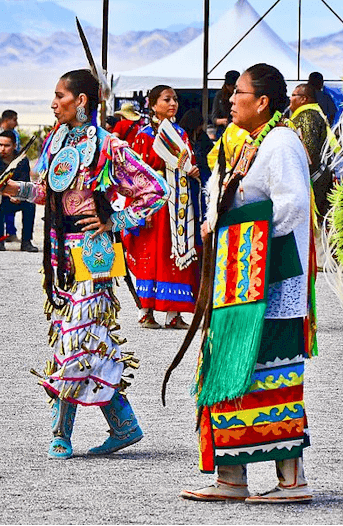
Indigenous people roamed the southwest region of the United States for hundreds of years. In the Las Vegas Valley, they often camped near the Las Vegas Springs, the only water source for miles around. The mountain’s cooler temperatures gave relief during the summer months.
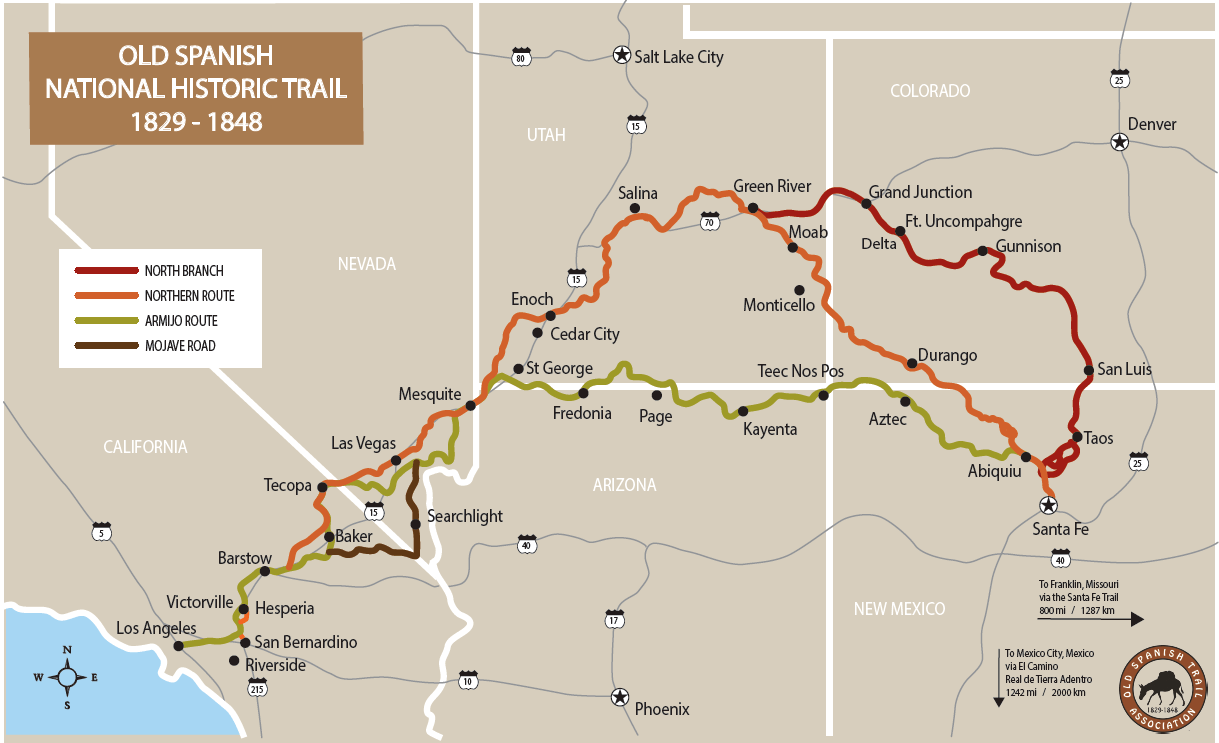
Beginning in 1828 and continuing through 1848, many traders and Spanish explorers traversed the desert while commuting from Santa Fe to Los Angeles, establishing what became known as the Old Spanish Trail.
It is claimed that Las Vegas received its name in 1830 from a Spanish scout in Antonio Armijo’s expedition. The myth renders a tale in which the scout, Rafael Rivera, discovers the springs after breaking away from the main group. He referred to his find as “Las Vegas,” which is a Spanish term for “The Meadows”, describing the lush grasses thriving around the springs. However, the history is sketchy at best as to Rivera’s precise trail. He most likely followed the Las Vegas Wash to Whitney Mesa, then headed in a southwesterly direction missing the springs by a couple of miles.
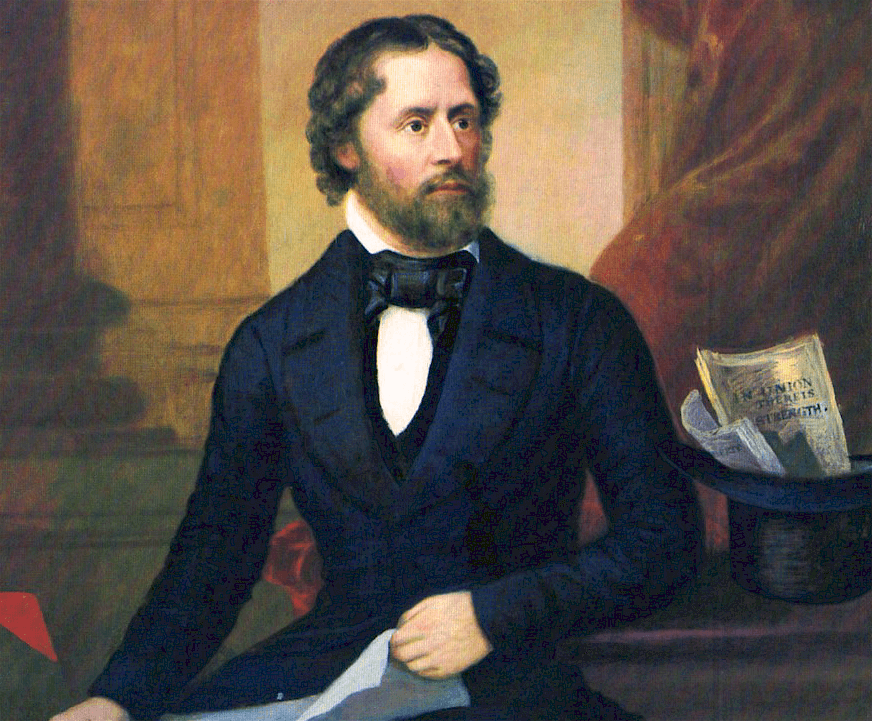
Western explorer John C. Fremont journeyed through Las Vegas in 1844 and did camp at the springs. He noted the Old Spanish Trail in his journal and labeled “Vegas” on his map. This is the first known map on which Las Vegas was named.
1848 - The Mormon Road
Pioneers from the Church of Jesus Christ of Latter-day Saints arrived in northern Utah in 1847. Jefferson Hunt made trips from Salt Lake City to southern California for much needed supplies, traversing a section of the Old Spanish Trail.
When the first wagon was driven over the trail, the possibility of wagon freighting arose. Wagons could carry larger hauls than the mules and horses used by traders. Church leaders felt that wagons could usher both supplies and persons between the two states.
A network of outposts was organized between San Bernardino and Salt Lake City to support the road’s travelers. As traffic increased, this section of the Old Spanish Trail took on the new name, the Mormon Road.
1855 - The Las Vegas Mission and Fort Begin
Las Vegas was an important location on the Mormon Road because of its life-saving water source, the Las Vegas Springs. The springs had supported plant, animal and human life in the valley for thousands of years.
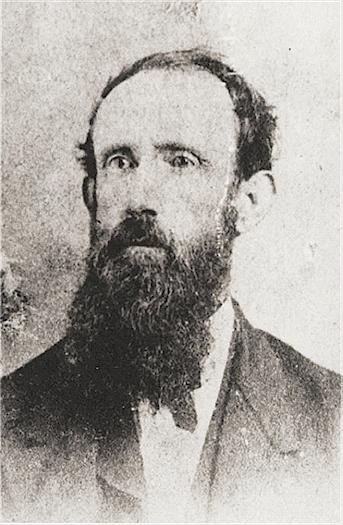
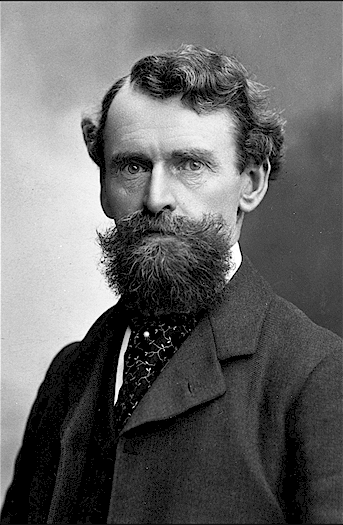
Euro-American settlement in Las Vegas began when church leaders called 30 men to the valley in 1855. Mission President William Bringhurst was charged with building a way-station for travelers, including a fort for protection, if needed.
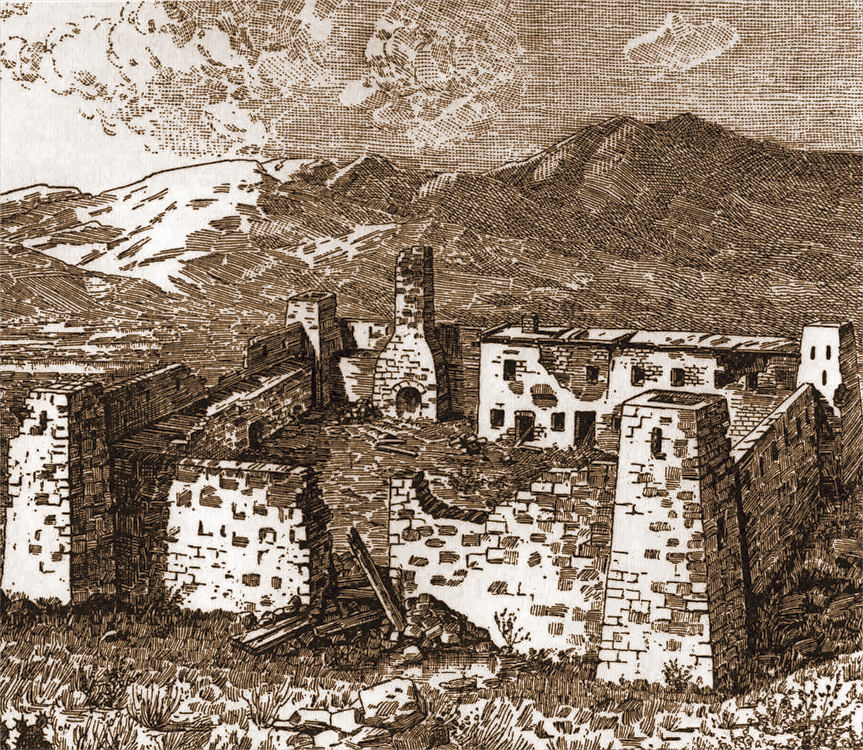
Over five months, the missionaries erected an impressive fort structure. Walls were constructed with thousands of adobe bricks, handmade on site. The walls were ultimately 14 feet high, 2 feet thick for the lower 8 feet of the wall, then 1 foot thick for the upper 6 feet. Walls were 150 feet long on each side, and two bastions rose above at two opposing corners. Compared to other Mormon forts throughout the Southwest, the Las Vegas Fort was one of the largest.
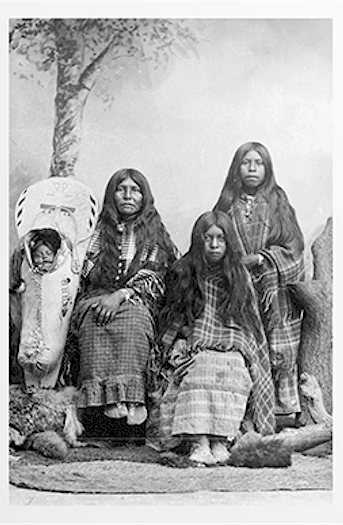
Settling in Las Vegas meant establishing friendly relations with the area’s native inhabitants, namely the Southern Paiutes. This was a priority for the mission, as Las Vegas was categorized as an “Indian Mission.”
While the Native Americans had met with travelers and western explorers for several years by then, the church’s presence had long-term potential. Over the two-year mission, peace between the two groups was indeed maintained, and tensions only escalated over the theft of food from the missionaries’ gardens and homes.
In the spring of 1856, a second wave of 30 missionaries was called to Las Vegas. The new missionaries were impressed when they arrived. Lorenzo Brown noted, The brethren here have made great progress, having been here just one year to the day. They have fenced 150 acres of land and cultivated it, built a Fort of Adobes…2 story houses, a [corral] with Spanish well [wall] which, considering that building timber has to be brought 30 miles and all the inconveniences which have to surmounted in a new settlement, I think cannot be beat.
The second group was permitted to bring their families, if able, and the original missionaries were allowed to retrieve theirs. This brought entire families to the Las Vegas Fort where children played and babies were born.
The Las Vegas Mission brought about many “firsts” for Las Vegas, including first birth. Zelpha Diadama Fuller was born on August 20, 1856. The first school was organized in 1856 for all children, including Native Americans. The teacher, Alexander Lemon, was paid $3 per quarter.
The federal government granted Las Vegas’ first post office on August 21, 1855. It was named after the mission president, “Bringhurst’s Post Office, Unknown County, New Mexico.” Las Vegas was in the Territory of New Mexico at the time.
1856 - Lead Mining
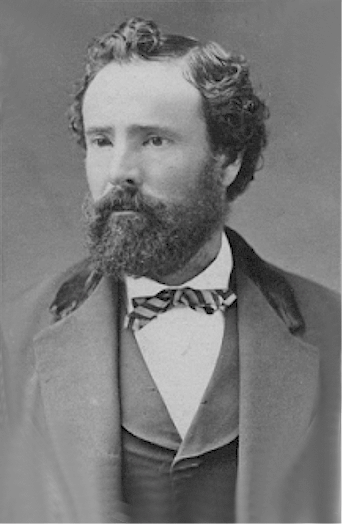
Lead was discovered 35 miles Southwest of Las Vegas at Mt. Potosi. After making church leaders aware, Brigham Young made its extraction a new priority for the mission. Several months of preparation included mail communications and one scouting trip by Nathaniel V. Jones. Meanwhile, William Bringhurst took steps to prep the worksite. He was unsettled when Nathaniel V. Jones returned to Las Vegas to head the operation.
While Jones had presented written permission from Brigham Young to utilize “men and animals, or anything that he might want for the furtherance of his mission,” William Bringhurst struggled to reconcile the words with his own interpretation of the circumstances. Letters seeking clarification were sent to Salt Lake City plus Jones spoke directly with Young during a supply run to Utah.
However, this took time. A leadership struggle was festering at the fort which eventually led to Bringhurst’s dismissal. Samuel Thompson was called as the new president of the Las Vegas Mission. After a few months of mining at Mt. Potosi, the endeavor proved difficult and the results disappointing. Nathaniel V. Jones ultimately reported the work not worth it under conditions of little water, little food to both man and animal, and arising difficulties with the native Americans. It was all too much to suffer for such little lead.
1857 - The Las Vegas Mission Ends
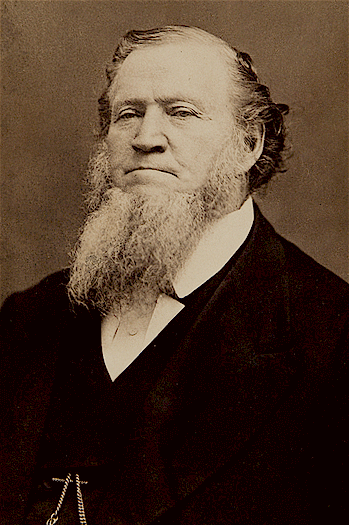
In 1857, the changing circumstances in Las Vegas prompted church president Brigham Young to grant permission for the missionaries to return home. Growing enough food to sustain the increasing number of persons at the fort became difficult and was further hindered by Native American theft.
Morale was low after the disappointing attempt to mine lead, and the leadership struggle it caused. Additionally, the Mormon Road never ushered in the large number of emigrants it hoped to. Missionaries were cleared to leave Las Vegas in February 1857; a few remained behind for a short time.
1858 - Minimal Activity at the Las Vegas Fort
The defunct Las Vegas Fort was sporadically used by travelers after missionaries returned to Utah. In February 1858, San Bernardino Mormon Fort leader Amasa Lyman made use of the fort’s furnace to smelt lead during an extended stop in Las Vegas.
The Southern Utah Indian Mission employed the Las Vegas fort in its operations. The fort was made a rendezvous point during the Utah missionaries’ explorations, plus a handful of men sometimes slept overnight, keeping an eye on a small amount of crops for food. One journal entry names Benjamin Hulse as Las Vegas president during this time.
Relations with the Native Americans had regressed by this time, as evidenced by a tense standoff when a tribal member was thought to have died by poison given by whites. The missionaries found the man alive, though ill, and helped him recover.
In the fall of 1858, Native Americans swept down from the mountains and stole the harvest from the fields. This sparked the official closure of the Las Vegas Mission and Fort. Notably, William Bringhurst regained full confidence of Brigham Young and became one of the 6 founding members of Brigham Young University.
1860 - The First Steps To A New Purpose
Late 1860 to 1861, Las Vegas Missionary Albert Knapp returned to Las Vegas with mining on his mind. A company from California had reopened Mt. Potosi and soon expanded its work into Eldorado Canyon. Albert Knapp wrote home about discovering rich mineral lodes in the canyon alongside John Moss and Joseph Good.
Albert’s brother, William, soon joined him and also tried his hand at prospecting. Additionally, the Knapp Store was organized out of the Las Vegas Fort. Fresh produce and other supplies were made available to miners who were in desperate need. Desert travelers also found replenishment from the fort.
Albert Knapp made a trip to California to collect a large payment for sold mining interests but would never return to Nevada. A prior kick by a mule hampered his health and he died in his sister’s California home where he sought comfort.
William remained in Las Vegas. He split his time between Eldorado Canyon and ranching at the fort with fellow miners Jerry Stevens and William Cowan. Selling food and supplies brought a new purpose for the fort.
1865 - Los Vegas Rancho
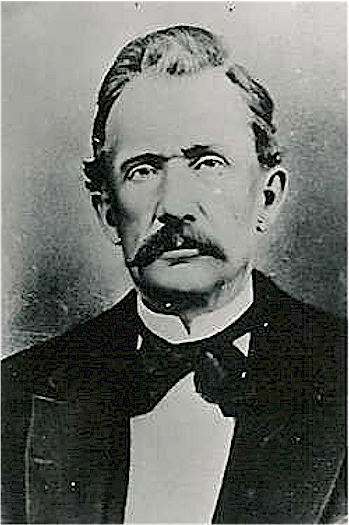
Octavius Decatur Gass acquired the Las Vegas Fort from William Knapp in late 1865. Gass had also come for Eldorado Canyon’s riches after striking out in the mines of Southern California. He was also intrigued by the possibility of steamboat navigation along the Colorado River.
Though Knapp relinquished control of the fort, he remained on property with Gass. Fellow miners Nathaniel S. Lewis and Lewis Cole were also there. Octavius Gass restructured the old Las Vegas Fort, improved the crops and elevated the property overall to a large and impressive ranch called the Los Vegas Rancho. It continued to sell food and supplies to travelers and miners.
Gass shortened the height of the Las Vegas fort walls, reusing the bricks for other structures. At the fort’s southeastern corner, additional walls were erected outside the bastion, creating rectangular enclosure. A Lincoln County land survey labeled the rectangular configuration as a “farm building.” Over time, as the original fort walls crumbled away and disappeared around the farm building, it managed to endure; eventually earning the honor of being the oldest non-native building in Nevada.
During Gass’ tenure at the fort-turned-ranch, he welcomed new Las Vegas settlers, namely John Howell, James Wilson, George Anderson and Conrad Kiel plus Charles Towner who made his way to Indian Springs. He also witnessed the rise of settlements in the Muddy Valley, including St. Thomas. In 1876, Octavius Gass acquired the Las Vegas Springs Ranch from Howell & Wilson when Wilson partnered with George Anderson for the new Sandstone Ranch in the Springs Mountains. Gass’ total land holdings increased to 960 acres.
Gass married St. Thomas resident Mary Virginia Simpson in 1872. They raised 6 children while living on the ranch. William Knapp bore a son and Nathaniel S. Lewis also had children. To survive financial challenges, Gass secured a $5,000 loan in gold from Archibald Stewart of Pioche, Nevada. He expected a good harvest from the ranch, but when bad weather destroyed his crops, he was unable to re-pay the debt. Even with an extension granted him by Stewart, he was still unable to fulfill repayment.
1880 - Rancho Foreclosed
After O.D. Gass defaulted on the $5,000 loan, Archibald Stewart foreclosed on the ranch. Mrs. Gass was pregnant with her seventh child; the family vacated the ranch four months after she delivered. The Gass family relocated to California, living in a handful of precincts until Octavius’ death in 1924.
The highest peak in the Las Vegas Range was named after Octavius Gass, Gass Peak, and Gass Avenue was given his name in honor of the contributions he made. William Knapp exited the ranch just before Gass. He went on to operate a successful ranch in the San Bernardino mountains until his death in 1913. A mountain road bears his name, “Knapp’s Cut-Off.”
Both Octavius Gass and William Knapp were accepted into the San Bernardino Pioneer Society. The two men were integral parts of Las Vegas and San Bernadino history.
1882 - The Stewart's Acquisition
Immediately after Gass’ departure, Archibald Stewart’s business partner took possession of the Las Vegas ranch. He managed the property for a year until dissolving business relations with Stewart. Archibald Stewart then moved his family to the ranch in June 1882.
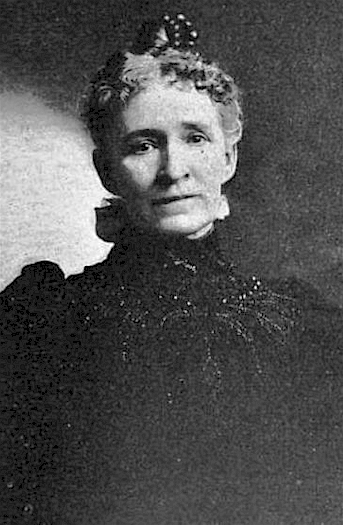
Because his wife, Helen, was not fond of leaving Pioche behind, Archibald promised her that it was only temporary, until he could get things set up and sell the ranch. Regrettably, he could not keep his promise because on July 13, 1884 he was shot dead at Kiel Ranch.
1884 - The Helen J. Stewart Ranch
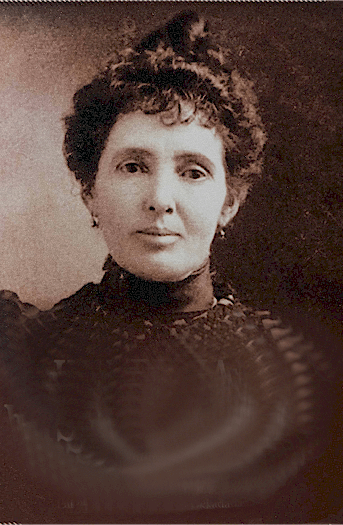
Helen J. Stewart was left a widow at the age of 30 and pregnant with her 5th child. In the immediate months following her husband’s death, her father came from California to help with the ranch, and Helen went to California to give birth near her mother.
When able, Helen petitioned the probate court for permission to sell the Las Vegas ranch, which was granted, but she was unable to find a buyer. Defying all gender norms of the time, Helen was now a rancher. She restored postal service to Las Vegas by becoming a postmaster in 1894. She also brought a teacher to the ranch for her growing children, Mr. Megarrigle from St. Thomas.
Over the next 18 years, Helen grew to be a savvy businesswoman. Her new business instincts served her well when a railroad man came through scouting Las Vegas. Though no tracks came through just then, Helen felt they possibly could in the future. She began to acquire as much land as possible. Because of this land pursuit, she became the largest land holder in Lincoln County, Nevada.
To her great fortune, Helen J. Stewart’s vision of a railroad in Las Vegas came to pass. In 1902, she sold her ranch and property to William A. Clark, owner of the San Pedro, Los Angeles, and Salt Lake Railroad.
1902 - The Big Sale
In December 1902, Helen J. Stewart sold her ranch and all-important water rights to Senator Clark’s railroad. This sale launched the modern town of Las Vegas when railroad executives platted a train stop and townsite 2 miles south of the ranch. The railroad’s acquisition of land included the Kiel Ranch.
1902 - Ranching Continues
Though the focus of Las Vegas history usually shifts over to Fremont Street and the new townsite, the Las Vegas Ranch continued to operate for 50 more years. The railroad handed over day-to-day operations to Dr. J.K.W. Bracken for the first two years, then chose to lease it out.
Between 1905 and 1955, ranch lessees included Walter Bracken, John Lefurgey, Orson Sanford, Clio Mobley, Dwight and Theresa Doolittle, Joseph Foremaster, Edwin Carewe, Albert Wittwer, William T. Stewart, Dell Stewart and Earl Leavitt. A sublease was granted to Edgar Gates for many years to run the auto court and swimming pool business.
1903 - A Name Change
For decades, the valley was often called “Los Vegas” to differentiate it from an already established “Las Vegas” some 500 miles away. Adding to the confusion, the two settlements were both initially part of New Mexico Territory. This was officially reversed in 1903 when the Nevada city was formally re-designated as “Las Vegas” by the postal service.
1926 - The First Lady of Las Vegas
Helen J. Stewart built a new house nearby after she sold the ranch. Helen lived out her life in Las Vegas, contributing mightily to the community in many ways. So much so that, upon her death in March of 1926, her friend, Delphine Squires, provided the best epitaph for her…
Her frail little body housed an indomitable will, a wonderful strength of purpose, and a courageous heart, and she faced death as she had faced the every day problems of life with sublime fortitude.
Sometime later, Mrs. Squires gave Helen Jane Wiser Stewart the title of First Lady of Las Vegas, which stands to this day.
1931 - The Boulder Dam
After years of planning, the U.S. Bureau of Reclamation started construction of the Boulder (now Hoover) Dam. It was the largest dam in the world when completed, and stores water named after Elwood Mead, Bureau of Reclamation Commissioner. Lake Mead remains the largest man-made lake in the United States.
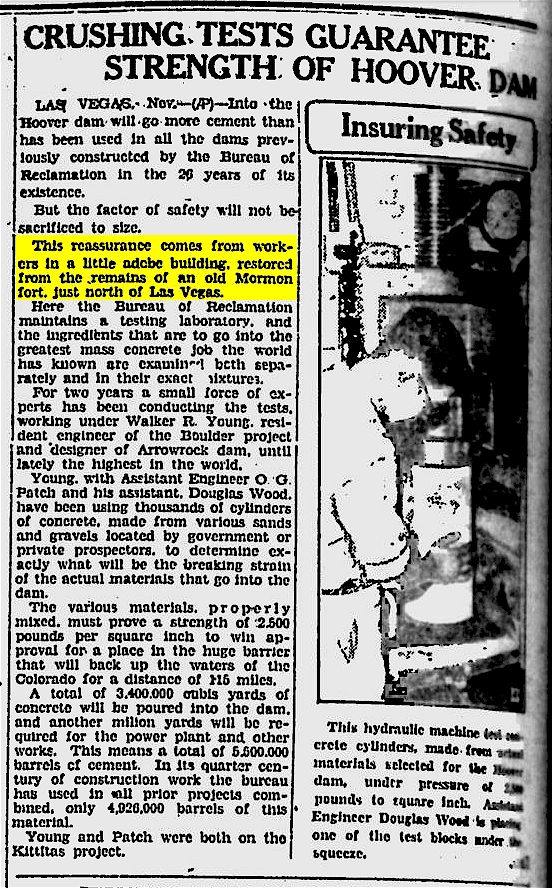
Safety of the finished dam was assured by federal engineers in the old “farm building,” now nicknamed “Old Fort.” The building was subleased from Joseph Foremaster for use as a concrete testing laboratory.
Engineers used various sources of local aggregate in search of which would create the strongest concrete product; strong enough to build a dam to hold back the waters of the Colorado River. After 2 years of experiments at the Old Fort, head Engineer Orin G. Patch ultimately recommended aggregate from the Arizona side of the river, which was used for the dam’s needs.
1939 - Daughters of Utah Pioneers
Nearly all signs of the original fort walls disappeared in the new century. However, the Old Fort building persevered as a surviving remnant. The Daughters of Utah Pioneers placed a monument on the property entitled “Las Vegas Fort” in 1939. This was the first real act of recognition to the site’s history.
In 1944, railroad owners agreed to lease the building to the women’s organization. Members carried out repairs, established a pioneer relic hall in one room, and offered tours to the public. They held fundraisers allowing them to erect a canopy over the building for protection from the elements. It has been said that the DUP rescued the Old Fort from certain ruin.
1955 - The Elks Acquisition
In 1955, the Las Vegas Benevolent and Protective Order of Elks purchased the parcel of the ranch containing the Old Fort and ranch houses. The Elks built themselves a meeting lodge, converted the main ranch house into a restaurant, and were considering more plans for the property.
During their 15 years of ownership, tensions arose many times between the Elks and the Daughters of Utah Pioneers regarding the Old Fort. The daughters focused on the building’s preservation, but the Elks had other hopes for the land it sits on. Every day the building stood was a success.
1971 - The City of Las Vegas
The City of Las Vegas purchased the Old Fort as part of a larger land deal with the Elks. The package sale was pushed for by several preservationists, and the transfer of ownership brought a sigh of relief to the Daughters of Utah Pioneers and others who worried for the building’s survival.
1972 - National Register of Historic Places
The City of Las Vegas applied to the National Register of Historic Places to have the Las Vegas Fort listed. Indeed, it was accepted in 1972 as the “Las Vegas Mormon Fort.”
1976 - Support Grows
The country’s bicentennial celebrations brought opportunity to individual communities to highlight their local histories, including Las Vegas and the Old Fort. The building was approved as a Bicentennial Project, making it eligible for renovation funds. Several historical organizations grouped together to help. Finding an adobe specialist proved difficult; a renovation of the Old Fort was completed in 1980.
1983 - The Friends of The Fort
In 1983, our organization, Friends of The Fort, was chartered by the State of Nevada. Our initial purpose was to get the Old Fort reopened after it closed for the renovation. City officials cited budget constraints as to why the building could not resume public access. We negotiated for and successfully secured a lease for the building and reinstated public tours.
1991 - The State of Nevada
City ownership did not settle all fears regarding the Old Fort’s security. Rumors swirled as the property seemed too valuable for developers to ignore. Friends of the Fort members, Elizabeth Warren and James Hinds, investigated any and all options to help. With the help of Senators Coffin and Ray Rawson, the State of Nevada acquired ownership of the property and organized it as a state historic park.
An extensive archaeological dig was carried out to learn more about the original Las Vegas Fort. The walls’ foundations were uncovered to reveal their precise locations. Hundreds of artifacts were recovered during the dig including fragments of glass, sherds of ceramic, tools, nails, utensils, cans and firearms cartridges.
The Old Las Vegas Mormon Fort State Historic Park includes a partially-recreated fort exactly where the original stood plus a small man-made creek representing what used to flow alongside the fort.
2005 - A New Visitor Center
The final step for the historic park was the organization of educational material within a visitor center. Architect Eric Strain was commissioned for the project. After much research on his part, he used various building materials representing the environment of the time.
The new visitor center’s dedication coincided with the 150th anniversary of the Las Vegas Mission, drawing 3000 visitors to the event. The Daughters of Utah Pioneers and Friends of The Fort continue to assist with bringing awareness of the property’s history to the community.